
Last updated on by MRC
Meet Anjali; she is 58; last month she had a stroke. Her right arm feels weak. Her balance is off. She can’t grip a spoon the way she used to do before.
Her doctor gives her a plan; it has two parts: physiotherapy and occupational therapy
At first, this confused her family. Isn’t that the same thing? Why does she need two therapists? Isn’t it the same kind of treatment?
The answer is no; it’s not the same kind. They both work on the body and help people to move again. In this case, it works as an integrated process to recover from the stroke.
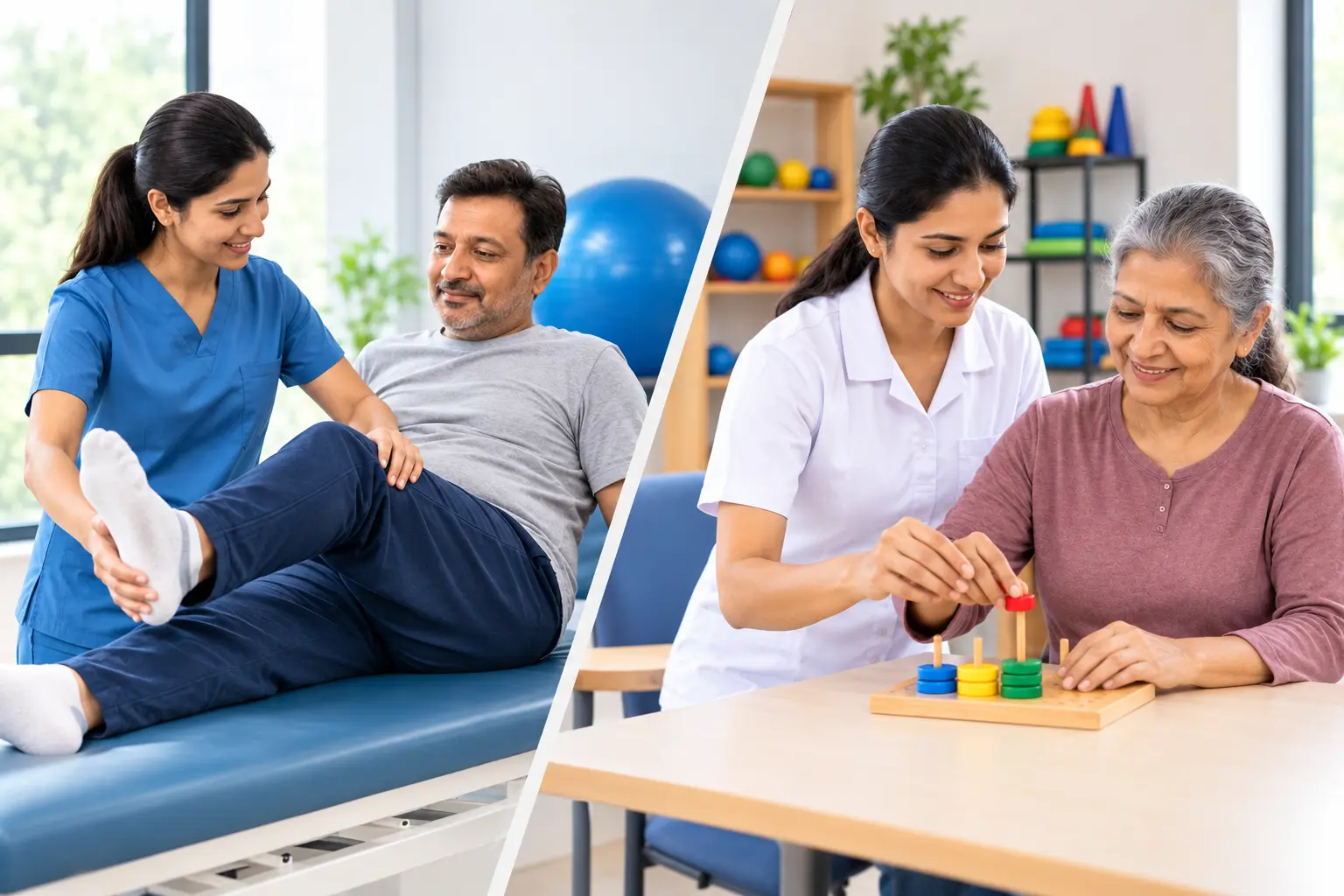
In simple words, physiotherapy gets the body ready to move; on the other hand, occupational therapy teaches the body to use that movement for daily life. One help to rebuild strength, balance, and motor skills. The other turns those skills into real actions, like buttoning a shirt or climbing stairs safely.
At MRC, we don’t treat these as two services stacked on top of each other. We treat them as one integrated process of intervention. Let’s break down each one carefully and understand where they overlap and how to know which person needs which treatment.
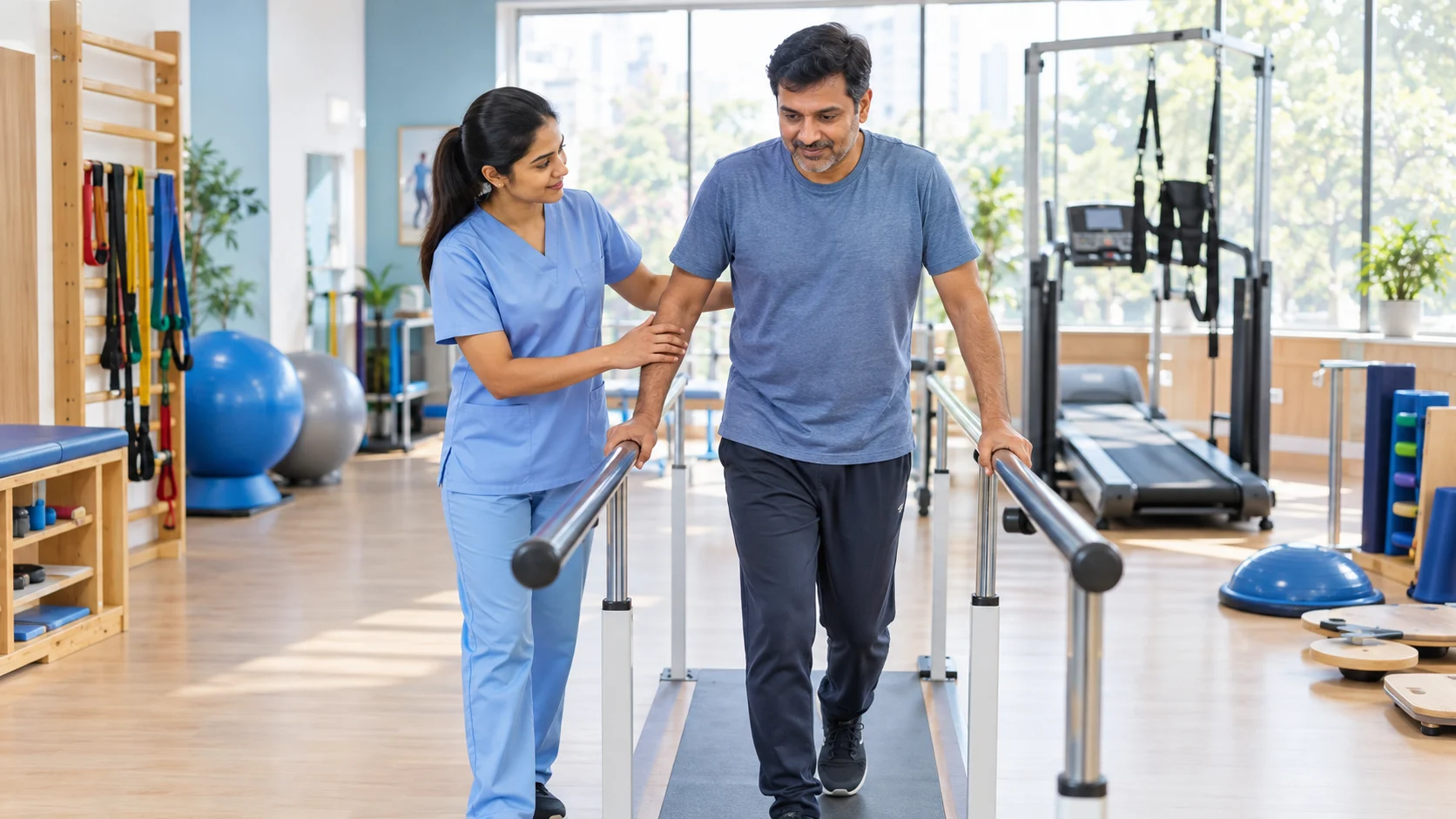
A physiotherapist looks at how your body moves. Then they find what’s broken in that movement. A stiff knee, a weak lower back or a shoulder that won’t lift past a certain point. A physiotherapist’s job is to fix the mechanism again and locomotion with the same spirit.
A physio works directly on muscles, joints, nerves and the way your brain talks to your limbs. Basically, the goal of the body is to reduce the pain, restore the movement and rebuild strength and motor skills from toe to head.
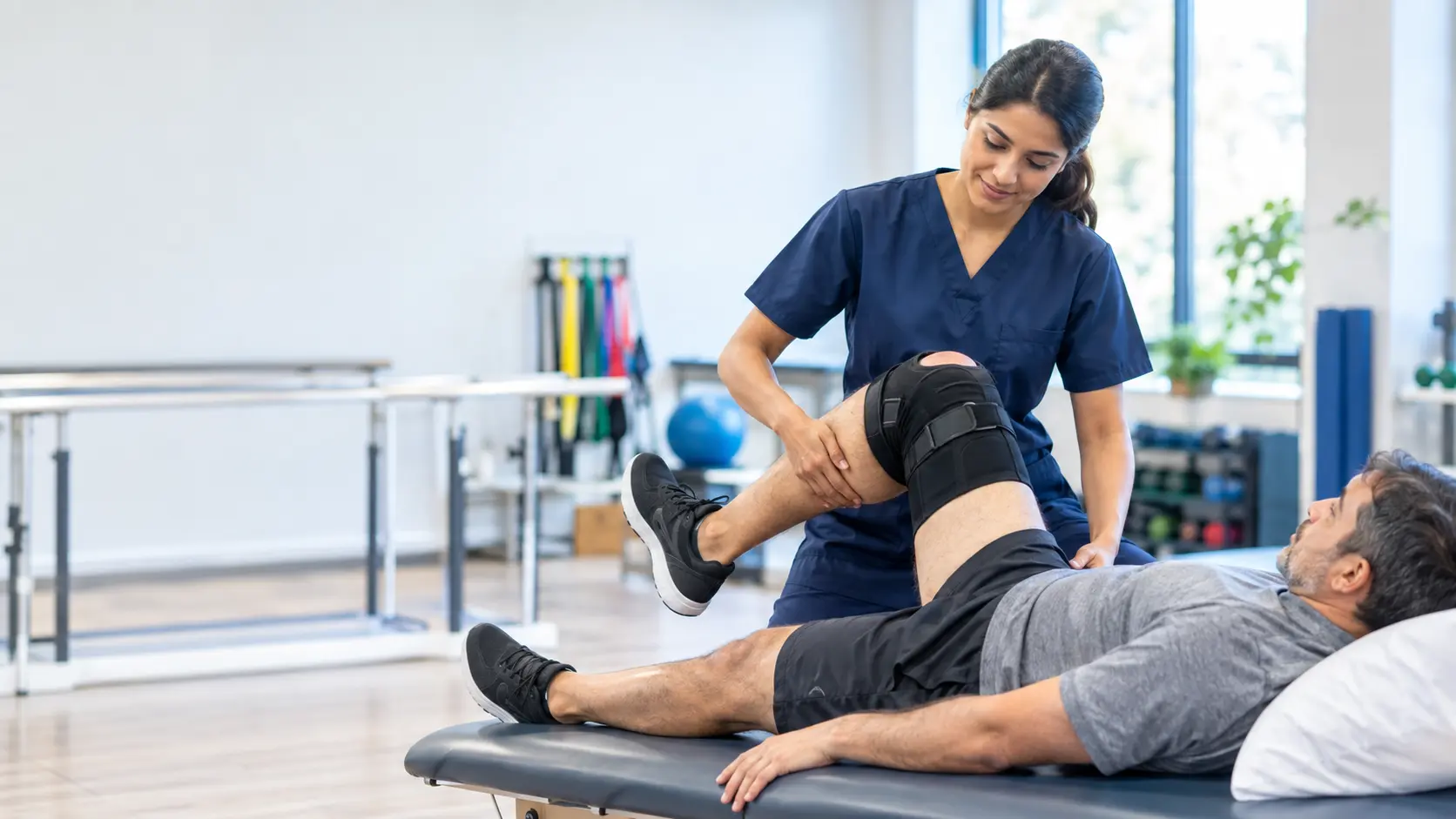
A quick example: Rohan, 34, tore his ACL playing football. Right after surgery, his knee barely bends. He can’t put weight on it. A physiotherapist starts with basic exercises: bending the knee a few degrees, activating the thigh muscles, working on balance while standing. Week by week, the knee gets stronger. By week eight, Rohan can walk without a limp.
Notice what physiotherapy did not do here. It didn’t teach Rohan how to drive again, or how to climb the stairs at his office, or how to sit through an eight-hour workday. That part comes next.
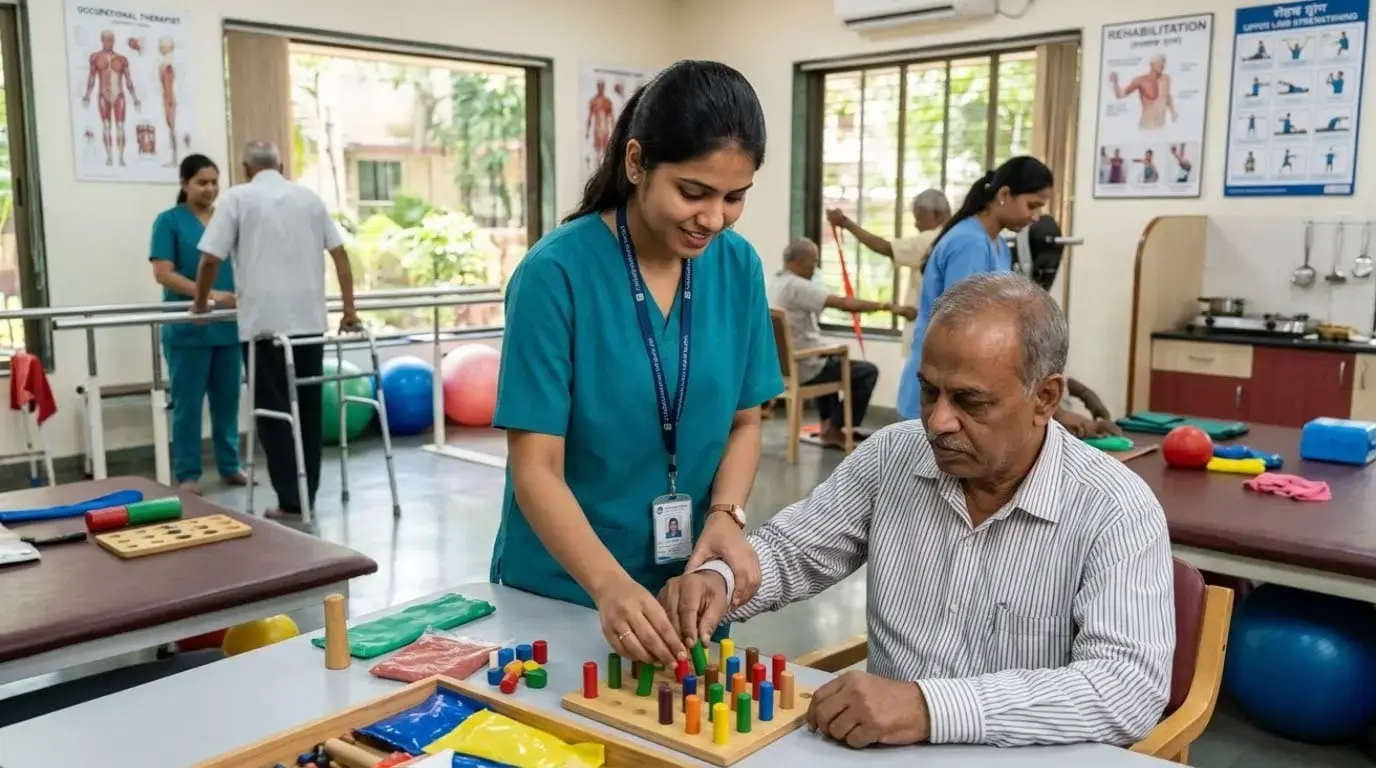
In simple words, it helps you with fine motor skills and cognitive skills, like holding a pen, using a zipper or remembering steps in a routine after a brain injury. An occupational therapist asks a different questions
Then they rebuild the skills for those exact tasks. Occupational therapy isn’t about the injury itself. It’s about your life around the injury.
Get more insights on: What Does an Occupational Therapist Do in Rehab?
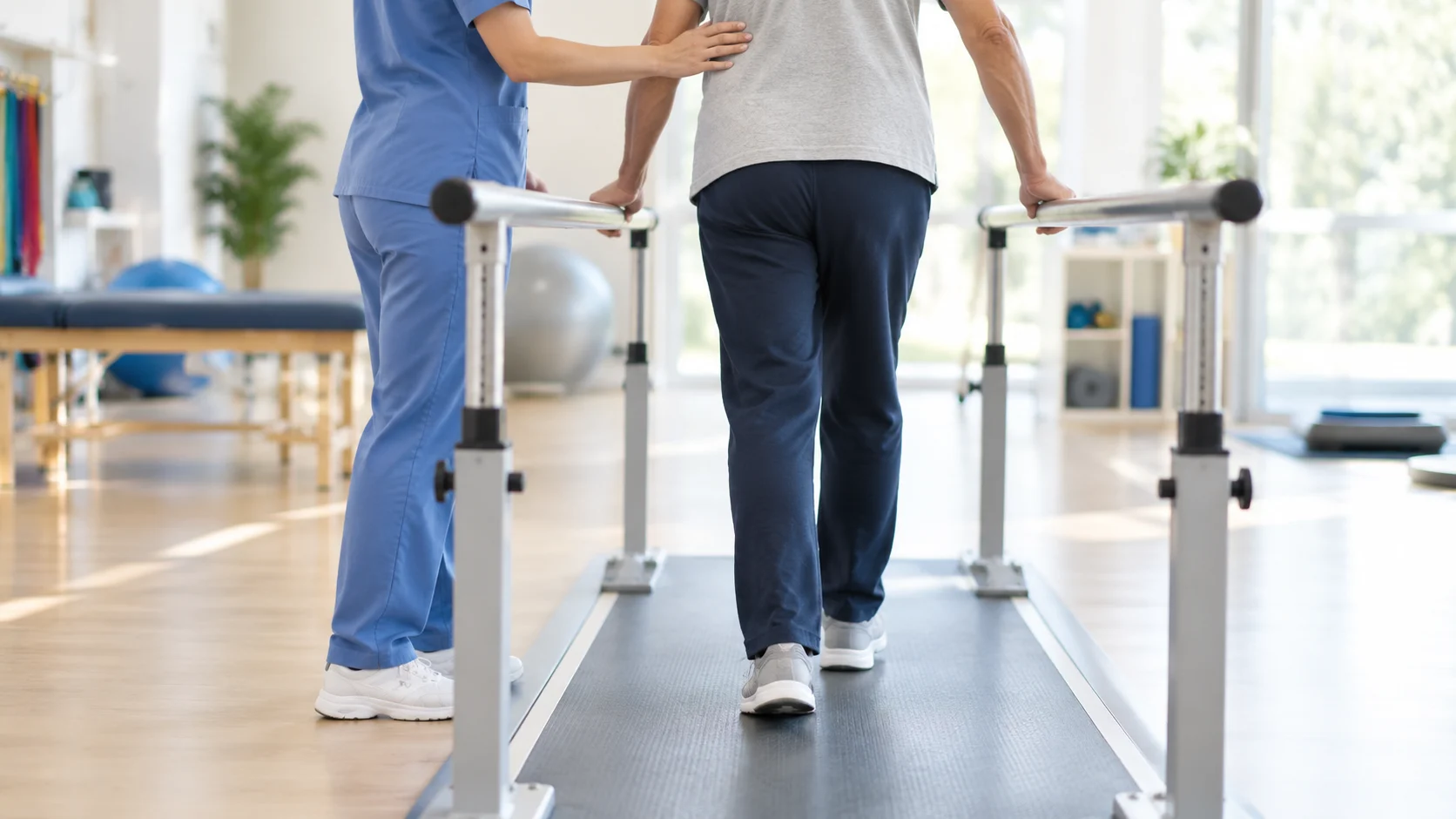
A quick example: Go back to Anjali, the stroke patient. Her physiotherapist works on her arm strength and balance. Her occupational therapist works on something different: how she’ll actually get dressed, cook a meal, and hold a cup with her weaker hand. They might introduce a modified spoon with a thicker handle. They might practice the exact motion of buttoning a shirt, ten times a day, until it becomes automatic again.
One therapist builds the raw ability. The other applies it to Anjali’s real world.
Both occupational therapy and physiotherapy aim to help people recover and live more independently. However, they approach recovery from different angles.
| Aspect | Occupational Therapy (OT) | Physiotherapy (PT) |
| Primary Focus | Helps people regain the skills they need to manage everyday activities and take part in the things that matter to them. | Helps people move more comfortably and safely by improving physical strength, mobility, balance, and body function. |
| Main Goal | The focus is on helping a person become more independent with activities such as dressing, eating, writing, cooking, bathing, and working. | The focus is on restoring movement, improving strength and flexibility, reducing pain, and helping the person move with greater confidence. |
| Conditions Treated | OT can help people whose health condition affects daily life. This may include stroke, brain injuries, Parkinson’s disease, arthritis, developmental conditions, cerebral palsy, and certain mental health conditions. | PT can help people with problems affecting movement and physical function, such as back pain, sports injuries, stroke, Parkinson’s disease, joint problems, respiratory conditions, and recovery after surgery or injury. |
| Methods Used | Treatment may involve practising everyday activities, improving coordination and motor skills, working on cognitive or sensory abilities, using adaptive equipment, and making simple changes to the home or workplace. | Treatment may include guided exercises, hands-on therapy, stretching, balance training, movement practice, posture correction, and other techniques that support physical recovery. |
| How Progress Is Measured | Progress is often seen when a person can perform daily activities with less help and greater confidence. | Progress is often measured through better movement, strength, flexibility, balance, mobility, and reduced pain. |
| Where Therapy May Take Place | OT may be provided in rehabilitation centres, hospitals, homes, schools, workplaces, or other settings based on the person’s needs. | PT is commonly provided in hospitals, clinics, rehabilitation centres, sports facilities, and other healthcare settings. |
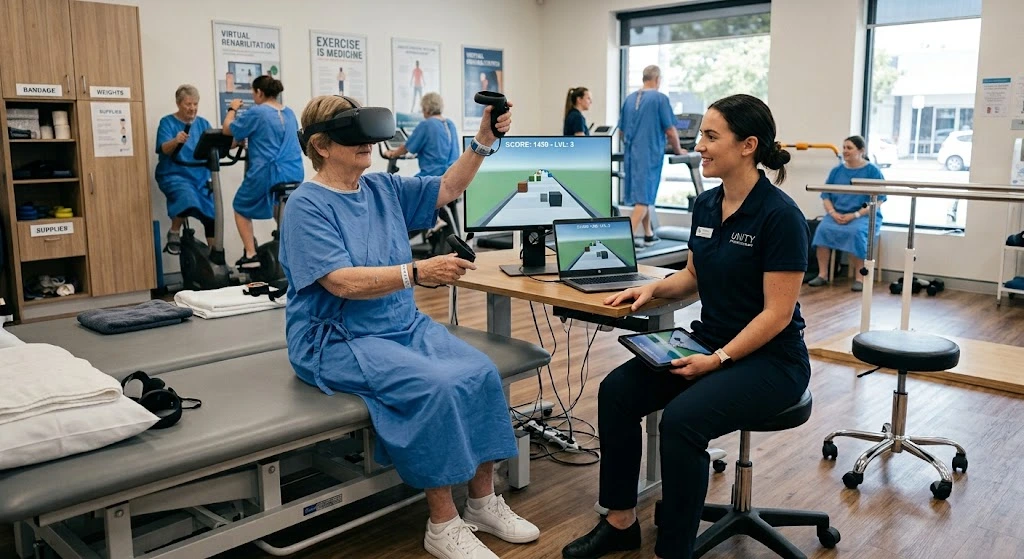
Physiotherapy is generally recommended when a person has difficulty with movement, strength, balance, flexibility or pain. It can help to recover physical function after an injury, surgery, or medical condition that makes every day movement easier and safer.
Occupational therapy is more accurate when a health condition makes everyday activities difficult. The focus is not only on physical ability but also on helping a person manage personal care, work, school, and other meaningful activities as independently as possible.
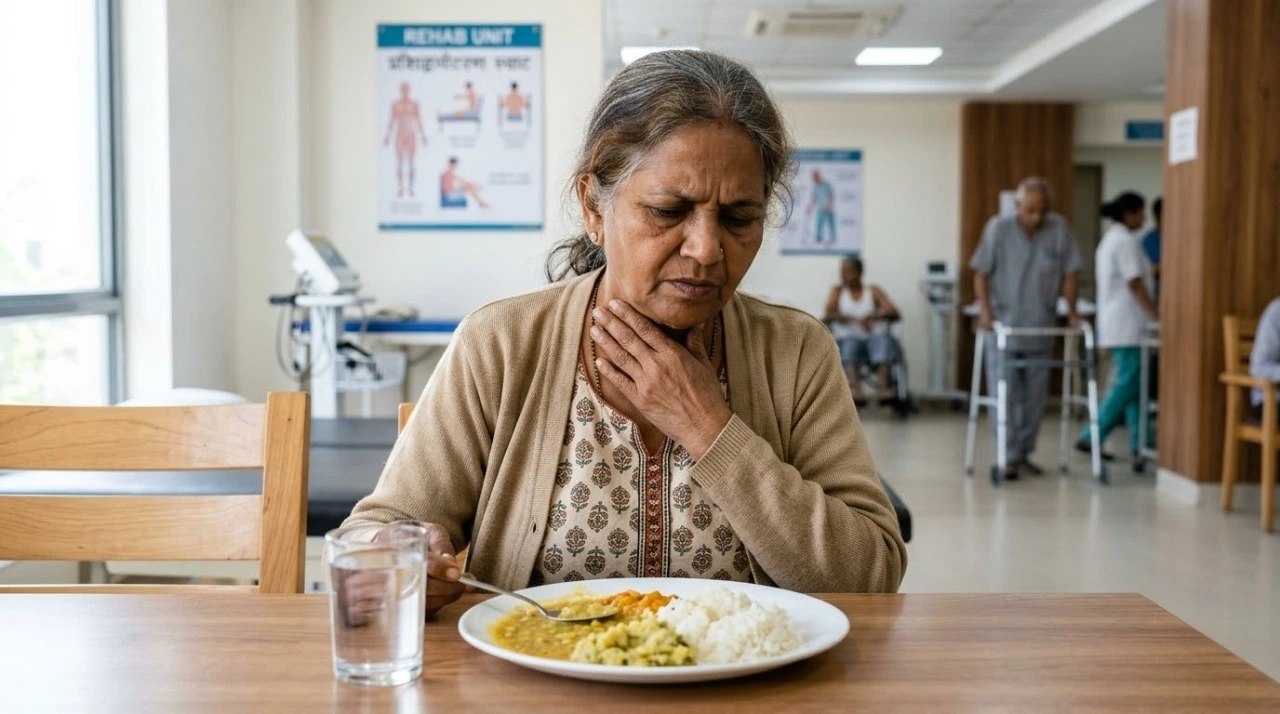
A person may be physically strong enough to stand but struggle to get dressed. Someone may be able to walk across a therapy room but feel unsafe getting into the shower. After regaining movement in one hand but still find it difficult to prepare a meal.
These conditions need a holistic approach and integrated therapy for real rehabilitation.
At MRC, our integrated rehabilitation model brings physiotherapists and occupational therapists into one coordinated care plan from day one. Most of our rehabilitation cases combine physiotherapy and occupational therapy under one integrated plan, leading to faster, more complete recovery outcomes. Instead of patients bouncing between disconnected appointments, our teams share notes, align goals, and track progress together, so every session moves you closer to real independence, not just clinical milestones.
Our approach is built on the principles that matter most in healthcare: real clinical experience treating stroke, orthopaedic, and neurological cases; therapists with verified expertise and ongoing training; a reputation built on evidence-based rehabilitation practices; and a transparent process where you always know what your recovery plan involves and why.
If you or a loved one needs rehabilitation support, contact MRC to book a consultation and get an integrated recovery plan built around your actual life, not just your diagnosis.