Last updated on by MRC
Chronic nerve pain can affect much more than physical comfort. Burning sensations, electric-shock-like pain, tingling, and persistent discomfort can make walking, sleeping, working, and performing everyday activities difficult. When medications and other conservative treatments do not provide sufficient relief, doctors may consider targeted procedures that interrupt the transmission of pain signals.
One such treatment is neurolysis, a procedure that uses chemical agents or physical techniques to disrupt the function of selected nerves or nerve fibres responsible for transmitting pain. Depending on the underlying condition, it may provide relief for certain types of persistent pain when other approaches have not worked well enough.
However, neurolysis is not suitable for every type of neuropathic pain. The choice of treatment depends on the cause of the pain, the nerve involved, the patient’s overall health, and the potential benefits and risks of the procedure.
Understanding how neurolysis works, how it differs from nerve decompression, and what patients can expect can help them make more informed decisions about chronic pain management.
Also Read: Living with Neuropathic Pain: Daily Challenges and Effective Remedies
Neurolysis is a medical procedure that deliberately disrupts the function of a specific nerve or nerve tissue to reduce pain signals. It may involve injecting a chemical substance around a targeted nerve or using a physical technique to interrupt nerve activity.
The main objective is to reduce pain originating from a particular nerve or nerve pathway while minimising unwanted effects on surrounding tissues.
Neurolysis may be considered in selected cases involving:
The suitability of the procedure varies according to the diagnosis. It is not a universal treatment for nerve damage, numbness, or unexplained chronic pain.
Neuropathic pain develops when the nervous system is damaged or does not function normally. Unlike pain caused solely by a cut, bruise, or inflamed joint, neuropathic pain can persist because abnormal nerve activity continues to send pain signals.
Patients may describe the sensation as burning, shooting, stabbing, tingling, or electrical.
Neurolysis aims to reduce these signals by interrupting the activity of a carefully selected nerve or nerve pathway.
The treatment process generally involves the following steps:
The intended outcome is meaningful pain reduction and improved daily functioning. The degree and duration of relief differ from person to person, and neurolysis does not necessarily reverse the underlying nerve damage.
The technique used for neurolysis depends on the nerve involved, the location of the pain, and the patient’s diagnosis. Different procedures use chemical agents, heat, or cold to interrupt nerve activity.
Chemical neurolysis involves introducing a neurolytic substance near a targeted nerve or nerve plexus. The substance disrupts nerve fibres and reduces their ability to transmit pain signals.
Commonly used agents include alcohol and phenol. Since these substances can affect surrounding tissues and nearby nerves, precise placement and careful patient selection are essential.
Chemical neurolysis is generally reserved for selected cases in which the expected benefits justify the risks. It is not routinely recommended for all patients with chronic non-cancer pain.
Radiofrequency ablation uses controlled electrical energy to generate heat around a targeted nerve. The resulting lesion interferes with the nerve’s ability to transmit pain signals.
Depending on the technique, radiofrequency treatment may be considered for selected cases of facet joint pain, certain joint-related pain conditions, and other well-localised sources of persistent pain.
The effects are often temporary because nerves may recover or regenerate over time. Repeat treatment may be considered when appropriate.
Cryoablation, also called cryoneurolysis in this context, uses extreme cold to disrupt the function of targeted nerve fibres.
It may be considered for selected peripheral nerve pain conditions. The procedure aims to reduce pain transmission while allowing the possibility of nerve recovery, depending on the technique and extent of treatment.
Some procedures target specific nerve plexuses or nerve pathways associated with difficult-to-control pain. For example, a specialist may consider neurolysis of the celiac plexus for selected cases of severe upper abdominal pain, particularly pain related to pancreatic cancer.
The choice of technique must be based on the source of pain and the available clinical evidence rather than on the assumption that all nerve-related pain responds to ablation.
Patients researching chronic pain treatments often encounter the term nerve ablation. Nerve ablation refers to a procedure that intentionally disrupts the function of a selected nerve to reduce pain. Depending on the context, the term may describe radiofrequency ablation, cryoablation, or other techniques that interrupt nerve signalling.
Neurolysis is a closely related term that commonly refers to the disruption or destruction of nerve tissue using chemical or physical methods.
The terms are sometimes used interchangeably, but their precise meanings depend on the procedure being discussed.
| Feature | Neurolysis | Nerve ablation |
|---|---|---|
| Main purpose | Disrupt targeted nerve function to reduce pain | Interrupt pain transmission through a targeted nerve |
| Techniques | May involve chemical or physical methods | Commonly refers to radiofrequency, cryoablation, or other ablative methods |
| Potential duration | Depends on the agent, technique, and nerve response | May last weeks to months or longer, depending on the procedure |
Understanding the treatment journey can help patients prepare for a consultation and know what to expect.
The specialist reviews the patient’s symptoms, medical history, medications, previous treatments, and relevant imaging. A diagnostic nerve block may be performed when appropriate. The doctor explains the expected benefits, alternatives, and possible complications before obtaining informed consent.
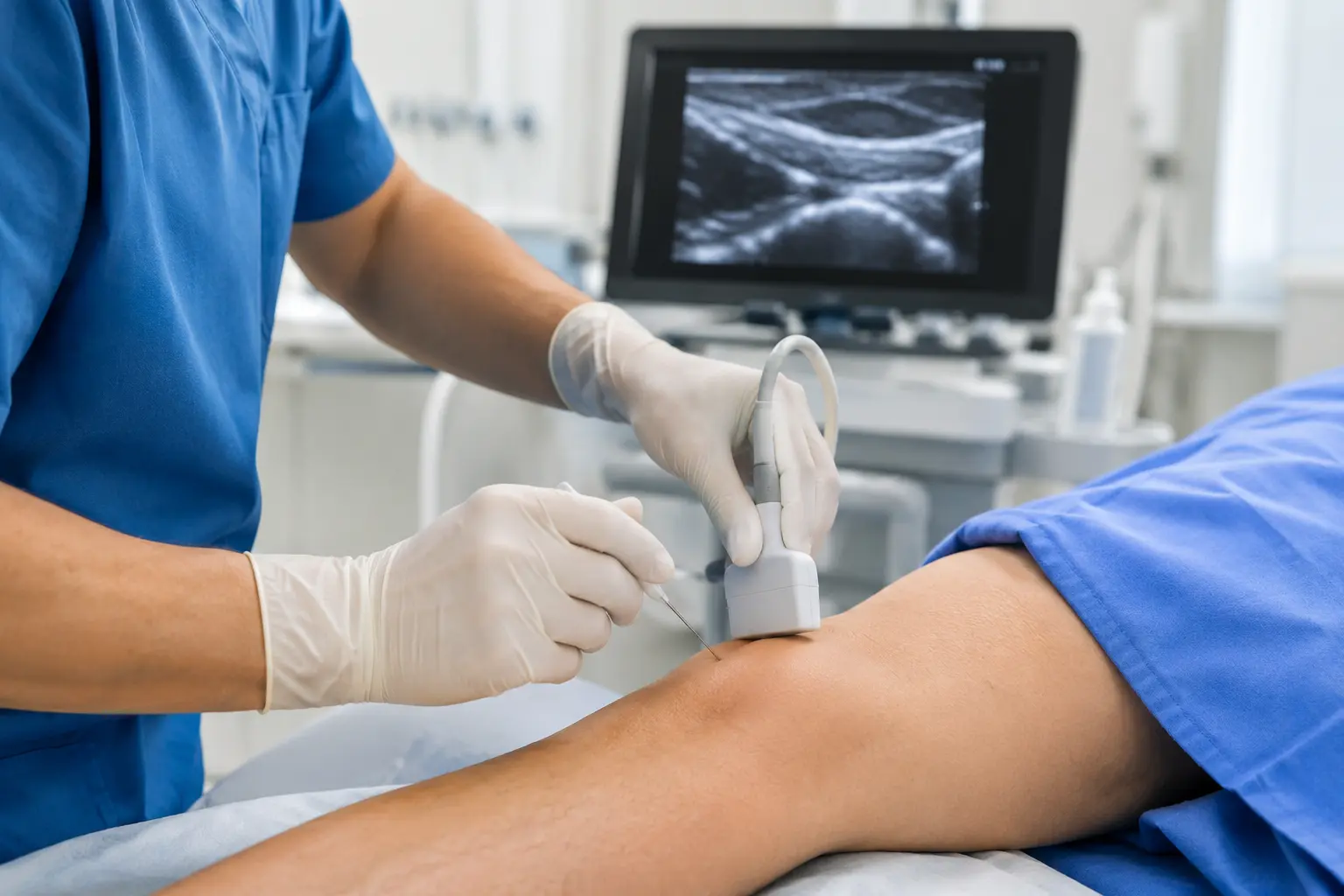
The targeted area is prepared under sterile conditions. Depending on the technique, the specialist may use ultrasound or fluoroscopy to guide the needle or probe. Local anaesthesia and monitoring are provided as needed.
The care team monitors the patient’s condition and provides instructions on activity, wound care if relevant, medications, and follow-up. Pain relief may develop over several days, depending on the technique. Any new weakness, spreading numbness, or unexpected symptoms should be reported promptly.
Recovery time varies according to the procedure, the treated nerve, and the patient’s overall health. Patients should follow their treating specialist’s advice rather than assume that pain relief means the underlying condition has resolved.
The potential benefit of neurolysis is a reduction in pain from a carefully selected nerve source. For some patients, this may make it easier to sleep, move, participate in rehabilitation, and manage daily activities.
However, the benefits need to be considered alongside the limitations.
Potential benefits
Limitations
The evidence supporting neurolytic procedures varies by technique and diagnosis. Chemical neurolysis, in particular, should not be treated as a routine solution for non-cancer chronic pain because evidence is limited for many applications and the risks can be significant.
Like other interventional pain treatments, neurolysis carries potential risks. Their likelihood and severity depend on the technique used, the nerve being treated, and the patient’s medical condition.
Possible complications include:
In rare cases, complications can be serious or lasting. Before proceeding, patients should discuss the risks specific to their treatment, the expected duration of relief, and available alternatives with their specialist. New or progressive weakness, difficulty walking, or changes in bladder or bowel control require urgent medical assessment.
Yes. When appropriate, neurolysis can form part of a broader pain management and rehabilitation plan rather than being treated as a standalone solution.
Reducing pain may help some patients participate more comfortably in activities that support recovery. The rehabilitation programme must still be tailored to the underlying condition and the patient’s functional abilities.
A multidisciplinary approach may include:
For patients with persistent pain, the goal is not simply to reduce discomfort. It is also to improve the ability to function safely and independently. The treating team should determine whether neurolysis is appropriate and how it fits into the overall recovery plan.
Managing chronic pain requires more than addressing individual symptoms. It involves identifying the underlying problem, selecting appropriate treatment, and supporting patients as they work towards better mobility and quality of life.
At the Medical Rehabilitation Centre (MRC), patients receive multidisciplinary care for chronic pain, neurological conditions, orthopaedic problems, and rehabilitation needs. With over two decades of experience, MRC focuses on doctor-led rehabilitation, personalised treatment planning, and coordinated care involving medical specialists and rehabilitation professionals.
For individuals seeking the best pain clinic in Kolkata, a comprehensive assessment can help establish whether their symptoms require conservative pain management, an interventional procedure, nerve decompression, or a structured rehabilitation programme.
Neurolysis may be an option for selected patients, but its suitability must be determined through individual clinical evaluation. MRC’s approach to pain management emphasises understanding the patient’s condition and identifying appropriate treatment pathways rather than assuming one procedure will work for everyone.
Neurolysis is a procedure that disrupts the function of a targeted nerve or nerve pathway to reduce pain signals. It may use chemical agents, heat, or cold and is considered for selected pain conditions when other treatments have not provided sufficient relief.
Neurolysis intentionally disrupts nerve function to reduce pain transmission. Nerve decompression aims to relieve pressure on a nerve, potentially improving its function. The appropriate treatment depends on whether the primary problem is a pain pathway or mechanical nerve compression.
Possible side effects include soreness, numbness, altered sensation, nerve irritation, increased pain, and muscle weakness. Infection, bleeding, or damage to nearby structures may also occur. The risks depend on the procedure and the nerve involved.
Consult a specialist if persistent pain interferes with daily activities or does not improve with appropriate treatment. A detailed assessment can help determine whether medication, physiotherapy, nerve decompression, neurolysis, or another approach is suitable.