Last updated on by MRC
Joint pain, stiffness and muscle aches are common among people living with cancer or recovering from it. Treatments like chemotherapy, radiation and hormone therapy can affect the joints and muscles, and the pain often continues long after the treatment ends. As a result, many patients look for natural, non-surgical ways to find relief.
But choosing the wrong treatment can be risky. With cancer in the picture, a therapy designed to make cells grow could encourage the wrong cells too. At the same time, ignoring the pain is not the answer. Untreated joint problems lead to stiffness, poor mobility and dependence on painkillers when the body needs strength the most.
At MRC, Platelet-Rich Plasma (PRP) therapy is one of the latest innovations in non-surgical pain management. For the right patient, it helps the body repair damaged joints, tendons and ligaments naturally. But it is not for everyone, and cancer is the most important exception. So, is PRP safe for cancer patients? Let us explain why the answer is usually no, and what the alternatives are.
Also Read: PRP Safety Guide: Recognizing Normal Side Effects vs. Warning Signs
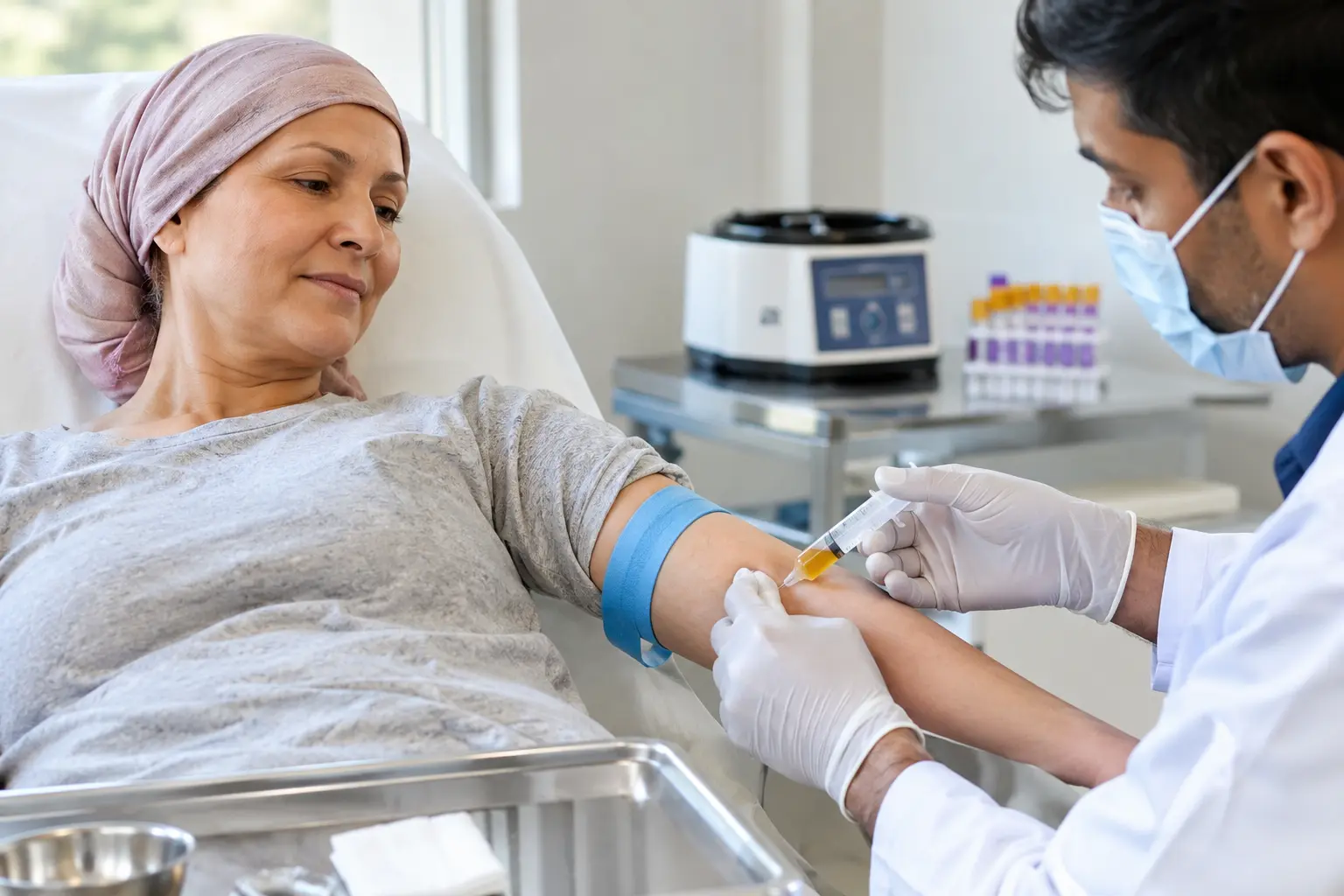
A small amount of blood is drawn from your arm and spun in a centrifuge to separate the platelets. This platelet-rich portion is then injected into the affected joint, tendon or ligament, often under ultrasound guidance for accuracy. Since it comes from your own body, allergic reactions are rare.
For most patients, PRP treatment side effects are mild and short-lived.
They usually include:
More serious PRP side effects such as infection, nerve irritation or tissue damage are rare and are mostly linked to poor technique or unhygienic settings. This is why the clinic and the doctor you choose matter as much as the treatment itself.
PRP delivers a concentrated dose of growth factors that tell cells to multiply and repair. That makes it effective for healing tendons and joints, and it is also why doctors avoid it in cancer patients.
Growth factors in PRP stimulate cell division and the formation of new blood vessels. Cancer cells depend on both to grow and spread. While research on this is still developing, most doctors will not inject concentrated growth factors into a body with active cancer, especially near a tumour site.
In leukaemia, lymphoma or myeloma, the blood is directly affected. The platelets drawn for PRP may be abnormal or too few, which makes the treatment unreliable and adds a risk of bleeding at the injection site.
Cancer treatment often lowers platelet counts and weakens immunity. This reduces how well PRP can work and raises the risk of infection after an injection.
A history of cancer does not always rule out PRP, but it calls for extra caution. The decision depends on the type of cancer, how long you have been in remission and the area being treated. At MRC, such cases are assessed individually, and clearance from your oncologist is a must before PRP is considered. For many cancer patients, safer options like physiotherapy, targeted rehabilitation exercises and other pain management approaches are recommended instead.
Cancer is not the only exception.
Doctors may also delay or avoid PRP if you have:
For the right patient, yes. PRP is a minimally invasive, low-risk option with little downtime. The key is proper screening. A detailed medical history, including any past or current cancer, blood tests and a physical examination help the doctor decide whether PRP suits you or whether another approach would serve you better. Being honest about your medicines and health conditions is the best thing you can do for a safe outcome.
When you are looking for the best pain clinic in Kolkata, experience and safety should come first. MRC, Dr. Ghatak’s Medical Rehabilitation Centre, is a neuro-orthopaedic rehabilitation centre led by Dr. M.M. Ghatak, with years of experience treating complex pain and mobility conditions. Every PRP procedure at MRC begins with thorough patient screening, so the treatment is offered only to those who will genuinely benefit.
What sets MRC apart is that PRP is never treated as a standalone injection. It is combined with physical medicine and rehabilitation, physiotherapy and structured follow-up, so patients rebuild strength and movement rather than just waiting for the pain to fade. If chronic pain is holding you back, a consultation at MRC can help you find out whether PRP is the right step for you.
Age alone does not rule out PRP. Many older adults with knee or shoulder arthritis benefit from it. What matters is overall health, platelet function and medication use, which your doctor will check before treatment.
Most side effects, such as soreness and mild swelling, settle within two to five days. If pain increases or you notice redness, warmth or fever, contact your doctor promptly.
Doctors usually advise avoiding anti-inflammatory painkillers for some time before and after PRP, as they may reduce the treatment’s effect. Your doctor will suggest a suitable alternative if needed.
This depends on the condition and its severity. Some patients feel relief after one session, while others need two or three sessions spaced a few weeks apart.
In some cases, yes, but only after careful assessment. The type of cancer, time in remission and clearance from your oncologist all matter. Patients with active cancer are generally advised to avoid PRP.
Steroids reduce inflammation quickly but offer short-term relief and may weaken tissue with repeated use. PRP aims to support actual tissue repair. The right choice depends on your condition, and your doctor can guide you.