Last updated on by MRC
For individuals who are bedridden, recovering from surgery, or utilizing a wheelchair, mobility limitations bring a hidden, painful complication: pressure sores. Also known as bedsores or pressure ulcers, these chronic wounds develop when prolonged pressure cuts off essential blood supply to the skin and underlying tissues.
If you or a loved one is dealing with a stubborn, non-healing ulcer, standard wound care can sometimes feel like a slow, uphill battle. Fortunately, modern medical technology has introduced an advanced, non-invasive option that is transforming chronic wound treatment: 1064 nm High-Intensity Laser Therapy (HILT).
This guide explains how this revolutionary laser technology works, why it is considered a breakthrough for skin ulcer treatment, and how it can accelerate recovery.
Also Read: A Comprehensive Guide to Therapeutic Paraplegia Exercises for Individuals
A pressure ulcer forms when constant pressure against a bony prominence – such as the hips, tailbone, or ankles—restricts local microcirculation. One of the most difficult variants to treat is the heel pressure ulcer. Because the heel has very little fatty tissue protecting the bone, it is highly vulnerable to deep tissue breakdown and takes an exceptionally long time to heal.
Medical professionals categorize pressure sores into four distinct stages:
Traditional bed sore ulcer treatment relies heavily on taking pressure off the area (offloading), maintaining wound hygiene, and using special dressings. However, when a wound becomes a “chronic refractory wound” (failing to heal after several weeks), standard dressings are often not enough. This is where advanced laser therapy steps in.
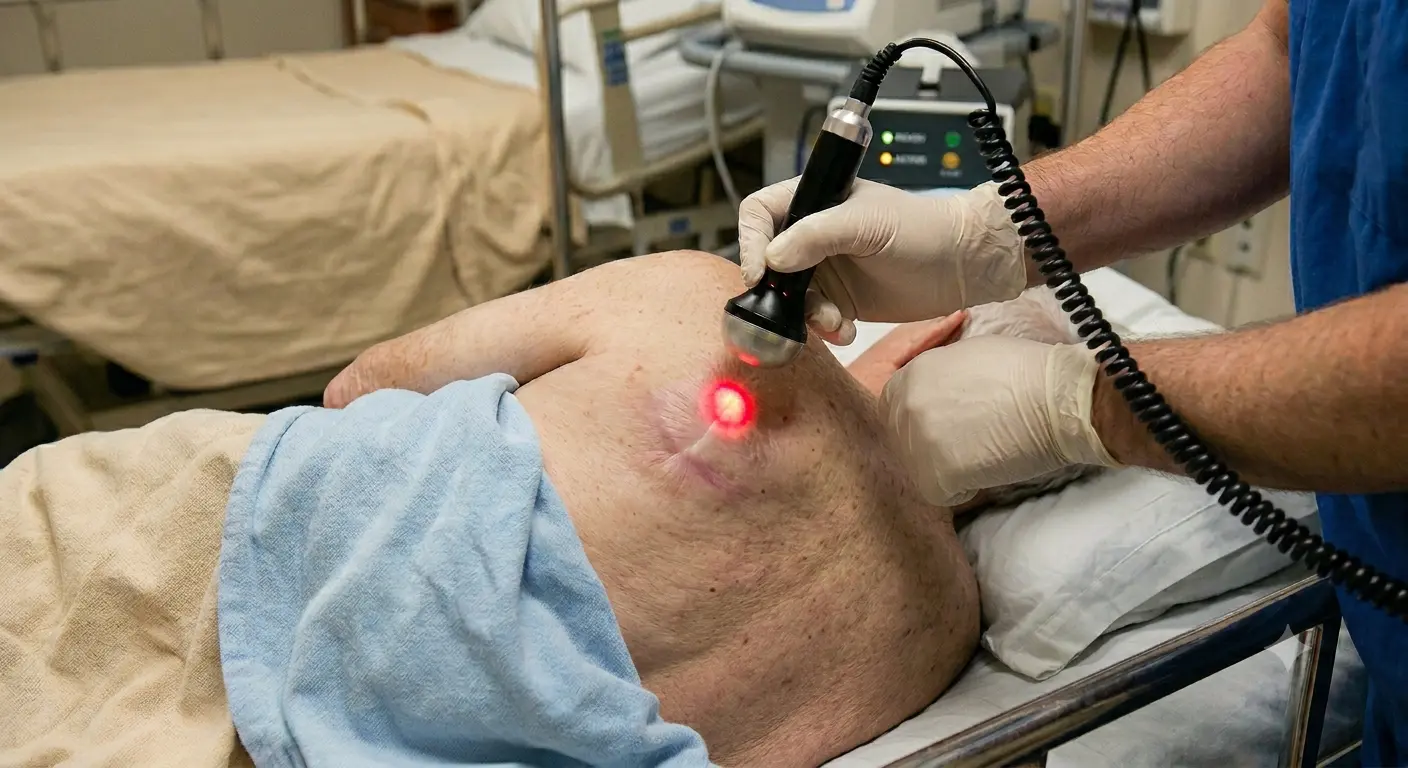
The 1064 nm laser is a Class 4, High-Intensity Laser. Unlike low-level cosmetic or therapeutic lasers, the 1064 nm wavelength possesses a unique ability to penetrate deep into human tissue (up to 5 centimetres) without causing superficial skin burns.
When directed at a pressure sore, the laser triggers a biological chain reaction known as photobiomodulation. It heals the wound from the inside out through three primary mechanisms:
At the heart of every cell lies the mitochondria—the powerhouse of the cell. The 1064 nm laser light stimulates mitochondrial activity, rapidly accelerating the production of Adenosine Triphosphate (ATP). This surge in cellular energy prompts fibroblasts to multiply and produce vital collagen fibers, speeding up re-epithelialization (the growth of new skin over the wound).
Chronic pressure sores lack oxygen because the local blood vessels are damaged or collapsed. The laser beam exerts a gentle, micro-massage effect on the deep tissues. This action reactivates compromised microcirculation, stimulates angiogenesis (the formation of new blood vessels), and promotes lymphatic drainage. As a result, harmful inflammatory fluid is cleared out, and oxygen-rich blood flows back in.
The deep, controlled warmth delivered by the 1064 nm laser blocks pain receptors in peripheral nerves, offering rapid comfort to the patient. Furthermore, the laser’s physical and photochemical properties disrupt bacterial biofilms—the stubborn, invisible shields that bacteria use to protect themselves against standard antibiotics. By breaking down these biofilms, the laser acts as a powerful sterile agent, dramatically reducing the risk of wound infections.
Choosing 1064 nm laser therapy as part of your comprehensive pressure ulcer treatment plan offers several distinct advantages over traditional, passive wound care:
If your medical team recommends laser therapy for a heel pressure ulcer or body sore, the procedure is straightforward and stress-free:
Dealing with chronic wounds requires expert clinical intervention and cutting-edge technology. At (Medical Rehabilitation Center), we specialize in comprehensive, multidisciplinary recovery programs designed to restore your health and comfort.
Recognized as a premier destination for advanced physical rehabilitation and the best pain clinic in Kolkata, MRC offers a doctor-led approach to healing. Our expert team combines specialized offloading strategies, advanced clinical wound care, and state-of-the-art 1064 nm High-Intensity Laser Therapy to successfully close stubborn bed sores.
Don’t let a chronic wound compromise your recovery or quality of life. Experience world-class care right here in Kolkata.
Yes, it is highly safe. In fact, diabetic patients and the elderly—who frequently experience delayed healing due to poor circulation—benefit immensely from this technology. Because the treatment uses low-fluence energy settings distributed via a specialized pulse duration, it stimulates the tissue deeply without any risk of burning the skin.
Wound healing timelines vary based on the stage, size, and location of the ulcer, as well as the patient’s overall health. While pain reduction and reduction in swelling can often be noticed within the first few sessions, a visible reduction in the wound size typically takes 4 to 8 weeks of consistent treatment.
For deep Stage III or Stage IV pressure ulcers that involve exposed muscle or bone, laser therapy acts as an incredibly powerful adjunct (supportive) treatment. It is used alongside traditional medical protocols like surgical debridement, specialized medical dressings
No, the laser handpiece does not touch the open wound at any point. The therapist hovers the specialized laser device a few centimeters above the affected skin, sweeping it gently across the area. Because there is absolutely no physical contact or friction involved, the treatment is completely painless, sterile, and free from the discomfort usually associated with changing traditional wound dressings.