Last updated on by MRC
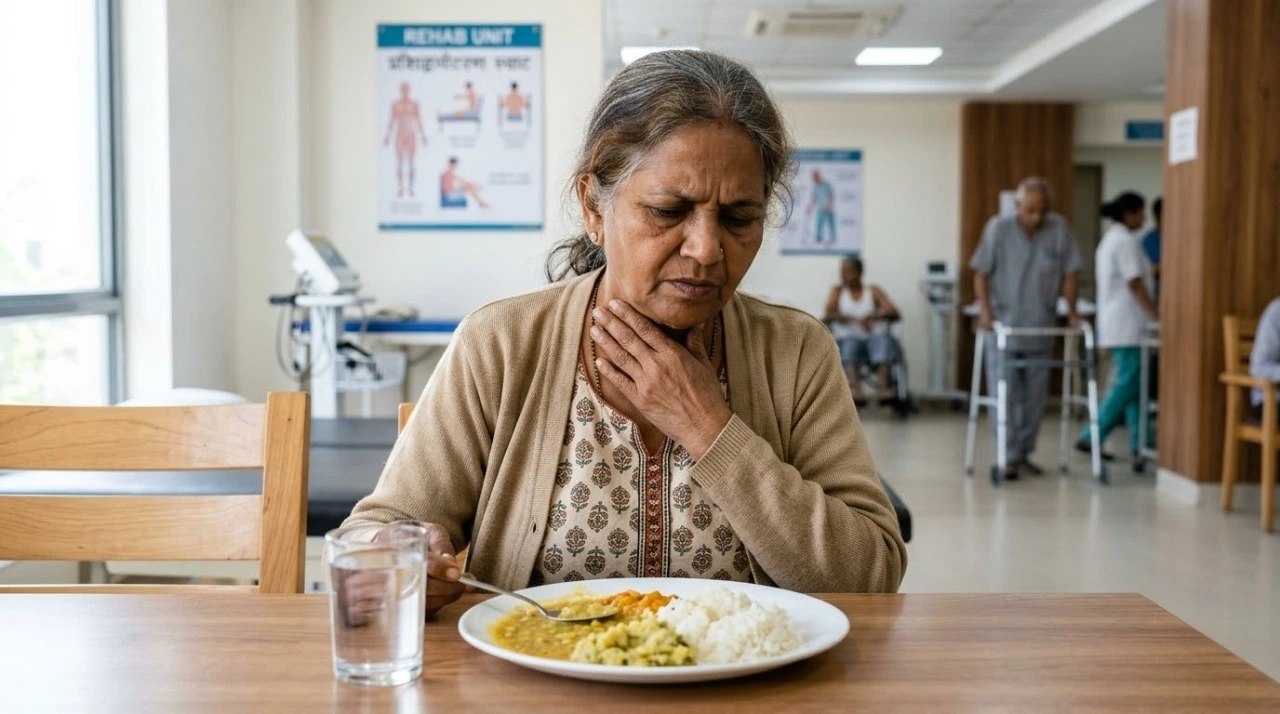
A stroke can affect nearly every function the body once managed automatically, and one of the most serious yet easily missed complications is dysphagia, the medical term for swallowing impairment. When stroke survivors develop swallowing trouble, eating and drinking, tasks most people never think twice about, can suddenly turn risky.
For patients, families, and caregivers, knowing the warning signs, the health risks involved, and the treatment options available can make the difference between a safe recovery and a preventable complication.
Swallowing involves a complex sequence of coordinated movements that require precise signaling between the brainstem, cortex, and the muscles of the mouth, throat, and esophagus. A stroke can disrupt sensory awareness, muscle strength, or timing at any stage of that process:
Most post-stroke swallowing difficulties center on the oropharyngeal phase, which is exactly where the airway is most at risk.
Also read: Early Stroke Rehab – The First 90 Days Recovery Guide
Dysphagia symptoms range from obvious vocal changes to subtle shifts in behavior at mealtimes.
Overt (Obvious) Signs
Subtle & Silent Signs
Once a speech-language pathologist has assessed a stroke survivor’s swallowing ability and outlined a safe diet plan, caregivers play a central role in keeping mealtimes safe day to day. A few practices consistently make a difference:
These habits don’t replace professional swallowing therapy, but they meaningfully lower the day-to-day risk of aspiration and choking while recovery is underway.
Left unmanaged, swallowing impairments after a stroke can lead to serious medical complications that slow down physical rehabilitation:
Prompt evaluation by a Speech-Language Pathologist (SLP) is essential before resuming oral nutrition:
Post-stroke dysphagia care balances immediate airway safety with long-term functional rehabilitation.
| Treatment Modality | Description & Purpose |
|---|---|
| Swallowing Therapy | Targeted exercises, chin-tuck maneuvers, thermal-tactile stimulation, and neuromuscular electrical stimulation (NMES) led by specialized speech therapists. |
| Dietary Modifications | Temporary adjustments to liquid thickness (e.g., nectar or honey consistency) and food textures (pureed, soft) to reduce choking hazards. |
| Temporary Tube Feeding | When oral intake is unsafe, a nasogastric (NG) tube or percutaneous endoscopic gastrostomy (PEG) tube provides vital nutrition and hydration directly while recovery progresses. |
| Postural Strategies | Sitting fully upright at a 90-degree angle during meals and maintaining an upright position for at least 30 minutes post-meal. |
Post-stroke dysphagia is common, but it’s rarely permanent when it’s caught early. The sooner a speech-language pathologist evaluates a stroke survivor’s swallowing function, the sooner a safe diet and therapy plan can begin, and the lower the risk of complications like aspiration pneumonia, dehydration, or malnutrition along the way.
Recovering from a stroke takes coordinated, multidisciplinary care that goes well beyond the initial hospital stay. Medical Rehabilitation Center (MRC) is a multidisciplinary rehabilitation hospital in Kolkata, bringing together neurologists, speech-language pathologists, pain specialists, and physiotherapists to support post-stroke recovery, including:
If you or a loved one is navigating post-stroke complications, MRC Kolkata offers coordinated, expert care to help rebuild safe swallowing and support recovery.
In many cases, no. With early swallowing therapy, the right dietary adjustments, and ongoing neurological recovery, most patients regain the ability to swallow safely over the following weeks to months.
Silent aspiration doesn’t come with obvious symptoms like coughing. Watch for subtler signs instead, such as recurring low-grade fevers, unexplained chest congestion, a wet-sounding voice, or unexpected drops in oxygen levels.
Temporary tube feeding delivers nutrients, hydration, and medication safely when eating by mouth carries a high risk of aspiration pneumonia, dehydration, or malnutrition.
This depends on the person’s specific swallowing assessment, but common recommendations include avoiding thin liquids like water or tea unless thickened as advised, dry or crumbly foods that are hard to control, and mixed-texture foods, such as soup with chunks, which are difficult to manage in a single swallow. A speech-language pathologist will typically provide a personalized list based on the swallow study results.
It varies by stroke severity and the extent of swallowing impairment. Some patients notice improvement within a few weeks of consistent therapy, while others, particularly after more severe strokes, may need several months of ongoing work with a speech-language pathologist.
It’s uncommon but possible, especially if the person has another stroke or a separate neurological event. Any new difficulty with swallowing after a prior recovery should be evaluated promptly rather than assumed to resolve on its own.
MRC brings speech and swallow therapy, pain management, and physical rehabilitation together under one roof, with a team built around post-stroke recovery specifically rather than general rehabilitation alone.