Last updated on by MRC
In India, studies further show that over 60% of children with CP experience speech and communication difficulties due to impaired muscle coordination, motor delays, or neurological conditions. These challenges often affect how they speak, understand language, express emotions, or interact socially – impacting both learning and daily communication.
Children diagnosed with Cerebral Palsy (CP) often face unique communication and speech-related challenges due to impaired muscle coordination, motor delays, or neurological conditions. These difficulties can affect how they speak, understand language, express emotions, or interact socially.
This is where speech and language therapy for cerebral palsy becomes a life-changing intervention. With structured sessions, personalised tools, and multisensory strategies, speech therapy helps neurodiverse children gain confidence, independence, and the ability to communicate meaningfully.
Cerebral Palsy affects motor control, which includes the fine muscle movements needed for speech. Children may experience:
Poor control of the tongue, lips, and vocal cords leading to unclear speech.
Difficulty planning and coordinating the movements needed to speak.
Struggle in understanding or using words, forming sentences, or expressing needs.
Weak oral muscles may affect chewing, swallowing, and breathing coordination.
Difficulty maintaining eye contact, taking turns in conversation, or understanding social cues.
These challenges can limit a child’s ability to participate in school, family interactions, and daily activities. However, early cerebral palsy speech therapy significantly improves these developmental areas.
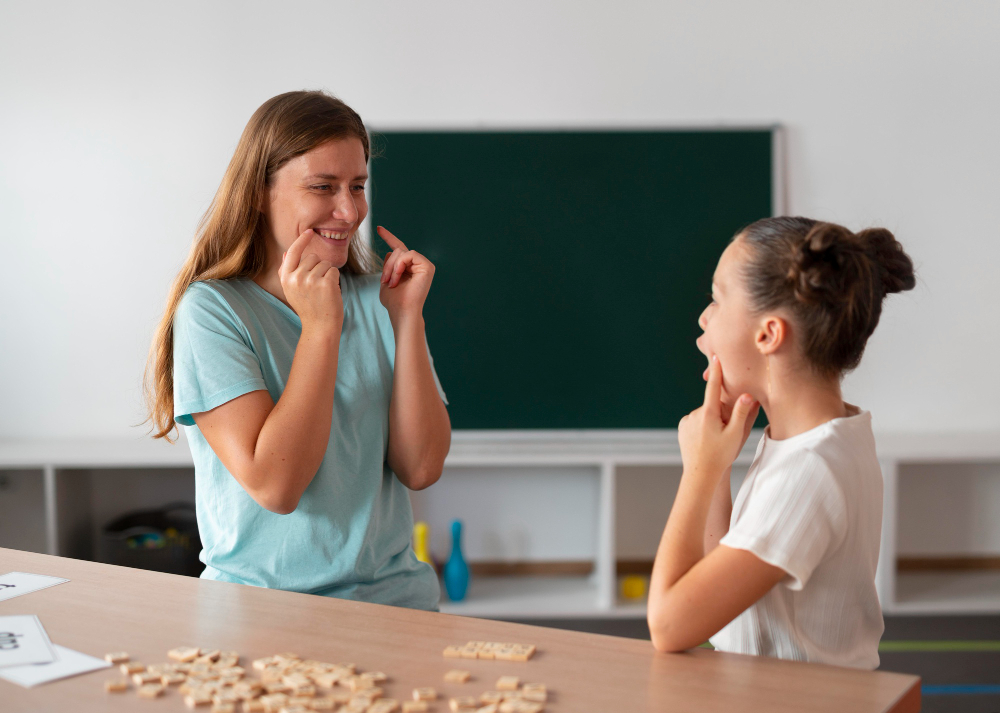
Therapists strengthen oral muscles through targeted drills to improve pronunciation, breath control, and articulation. Over time, children begin to speak more clearly and confidently.
Therapy builds vocabulary, sentence formation, comprehension, and expressive abilities – critical for academic and social growth.
For children with severe speech impairments, therapists introduce AAC tools such as:
These empower children to express themselves independently.
Specialised oral-motor exercises help strengthen the tongue, jaw, and lips, promoting safer eating habits and reducing choking risks.
Therapy incorporates role-play, storytelling, and conversational practice to help children build relationships and communicate comfortably in daily life.
Activities target memory, attention, sequencing, and problem-solving—skills essential for overall development.
Speech therapists use a combination of evidence-based techniques tailored to each child. Some core practices include:
1. Oral Motor Exercises: Strengthening the muscles of the face, mouth, and jaw through repetitive movements.
2. Respiratory and Voice Training: Improving breath support for louder, clearer, and more controlled speech.
3. Articulation Therapy: Helping children produce specific sounds correctly through phonetic placement and practice drills.
4. Augmentative & Alternative Communication (AAC): Using assistive tools for children with limited verbal abilities.
5. Sensory-Based Therapy: Integrating sensory cues (visual, auditory, tactile) to support learning and speech production.
6. Play-Based Therapy: Making learning enjoyable with games, toys, stories, and interactive activities.
Here are some commonly used speech therapy activities for cerebral palsy:
These activities help children gradually overcome communication barriers and achieve developmental milestones.
While cerebral palsy treatment often includes physiotherapy, occupational therapy, and medication, speech therapy plays a crucial role in holistic development.
Early intervention ensures:
Speech therapy empowers children to be better understood—and to understand the world around them.
At MRC, we specialise in early intervention programs designed specifically for children with neurodevelopmental conditions including Cerebral Palsy. Our team of certified speech-language pathologists offers:
MRC is committed to helping neurodiverse children lead more independent, enriched, and empowered lives. If you are seeking expert speech therapy in Kolkata, MRC provides the trusted support your child deserves.
Children with cerebral palsy deserve every opportunity to communicate, connect, and thrive. With structured speech and language therapy for cerebral palsy, they can overcome speech challenges and build a strong foundation for lifelong communication.
MRC stands as a dedicated partner for parents looking for comprehensive, compassionate, and effective therapy services. With personalised care, advanced intervention methods, and experienced therapists, MRC ensures that every child gets the chance to grow, express, and shine.
A Speech Therapist must hold a Bachelor’s or Master’s degree in Speech-Language Pathology (BASLP/MASLP) from a recognized institution and must be registered with the Rehabilitation Council of India (RCI) to legally practice in India.
Speech Therapy focuses on communication skills, speech clarity, language development, voice, and swallowing, while Occupational Therapy focuses on fine motor skills, daily living activities, sensory integration, and physical independence. Both therapies complement each other but address different developmental needs.
No. A Special Educator cannot practice as a Speech Therapist unless they hold RCI-approved speech therapy qualifications. They can support learning, behaviour, and academic skills, but speech and language interventions must be done by certified Speech-Language Pathologists.
Progress varies for each child, depending on age, severity, consistency, and home practice. Many children show noticeable improvement within 3–6 months, while long-term therapy continues to enhance communication skills.
Yes. Certified Speech Therapists are trained to manage oral-motor difficulties, helping children improve chewing, swallowing, and safe feeding patterns.
Early intervention – starting as early as 12–18 months – greatly improves communication outcomes. However, therapy can begin at any age depending on the child’s needs.