
Last updated on by MRC
A stroke can dramatically alter a person’s physical abilities, speech, emotions, and independence. However, timely and structured rehabilitation can significantly improve outcomes. The first 90 days after a stroke are considered the most critical phase in the stroke recovery process, as the brain shows the highest capacity for healing and re-learning skills during this period.
This guide explains early stroke rehabilitation, outlines the stages of stroke recovery, and presents a clear stroke recovery timeline with a detailed 90-day therapy plan. It is designed for patients, caregivers, and families seeking expert rehabilitation support, including those exploring Stroke Rehabilitation Centres in Kolkata.
Early stroke rehabilitation begins as soon as the patient becomes medically stable. During this phase, the brain’s neuroplasticity allows undamaged areas to take over lost functions. Delaying therapy can slow progress and increase the risk of long-term disability.
Key benefits of early stroke rehabilitation include:
The stroke rehab first 90 days often determine how well a survivor adapts to life after stroke.
Understanding the stages of stroke recovery helps set realistic expectations and goals.
This structured stroke recovery timeline allows therapy to progress safely and effectively.
The following table outlines a structured stroke rehab first 90 days plan, divided into days, weeks, and months, covering all major rehabilitation disciplines.
| Recovery Phase | Physical Therapy | Occupational Therapy | Speech & Language Therapy | Psychological Support |
|---|---|---|---|---|
| Week 0-1 | Passive movements, positioning, breathing exercises, bed mobility | Assessment of daily living skills, basic self-care support | Swallowing assessment, basic speech screening | Emotional reassurance, caregiver education |
| Weeks 1-2 | Assisted sitting, standing, and gentle strength training | Basic grooming, feeding, adaptive techniques | Early speech exercises, swallowing safety | Anxiety management, emotional stabilization |
| Weeks 3-4 | Balance training, assisted walking, and endurance building | Dressing, toileting, hand coordination tasks | Word formation, comprehension exercises | Coping strategies, motivation building |
| Weeks 5-6 | Gait correction, stair practice, strength progression | Household task simulation, fine motor skills | Conversational practice, memory exercises | Stress reduction, confidence development |
| Weeks 7-8 | Community mobility, posture and coordination | Independent daily activity training | Advanced speech clarity and fluency | Emotional resilience coaching |
| Weeks 9-12 | Endurance training, functional independence | Community reintegration skills | Complex language and cognitive tasks | Depression screening, long-term adjustment |
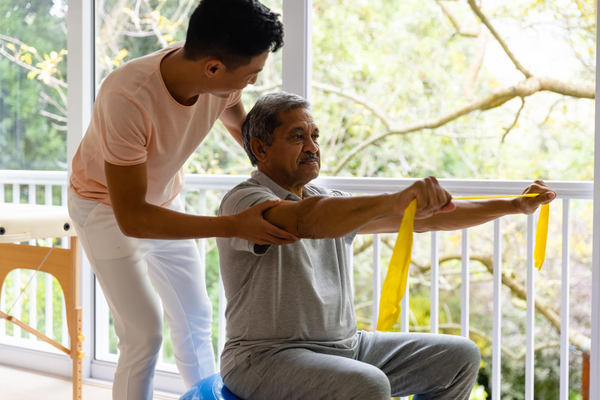
Physical therapy focuses on restoring strength, balance, posture, and walking ability. It plays a central role in every stage of stroke recovery, helping patients regain control over movement and prevent long-term physical limitations.
Occupational therapy helps stroke survivors relearn essential daily activities such as eating, dressing, bathing, and writing. It supports independence, which is a major milestone in the stroke recovery timeline.
Speech and language therapy addresses speech difficulties, language comprehension, cognitive communication issues, and swallowing disorders. This therapy is essential during the stroke rehab first 90 days, as communication recovery improves social and emotional well-being.
Emotional health is often overlooked but is a crucial part of early stroke rehabilitation. Anxiety, depression, and emotional changes are common. Psychological counseling helps patients and caregivers adapt positively throughout the stroke recovery process.
Recovering from a stroke requires expert care, timely intervention, and a deeply coordinated rehabilitation approach. At MRC Medical Rehabilitation Center, we understand that every stroke survivor’s journey is unique. That’s why MRC is recognized as a trusted Stroke Rehabilitation Centre in Kolkata, delivering structured, patient-centric care during the most critical phases of recovery.
At MRC, recovery is guided by a multidisciplinary rehabilitation model designed to support the complete stroke recovery process. Our integrated approach ensures that every patient receives consistent, goal-oriented therapy under one roof.
MRC offers:
With advanced infrastructure, experienced clinicians, and evidence-based practices, MRC ensures uninterrupted rehabilitation support even after the initial recovery phase.
The first 90 days after a stroke are crucial in shaping long-term recovery outcomes. At MRC Medical Rehabilitation Center, structured early stroke rehabilitation, consistent therapy, and compassionate emotional support help stroke survivors achieve meaningful improvements in mobility, communication, confidence, and independence.
By understanding the stages of stroke recovery and following a guided, personalized stroke recovery timeline, patients and families are empowered to actively participate in healing. Choosing MRC Medical Rehabilitation Center means choosing expertise, continuity, and care that truly makes a measurable difference in recovery outcomes.
The brain recovers and adapts most rapidly during this period, making therapy more effective.
Rehabilitation should start as soon as the patient is medically stable.
Yes, recovery continues beyond 90 days, but progress is usually faster during the early phase.
Physical therapy, occupational therapy, speech and language therapy, and psychological support are all essential.
Yes, many centres offer comprehensive programs that support both early and extended recovery.